Knowledge Bases
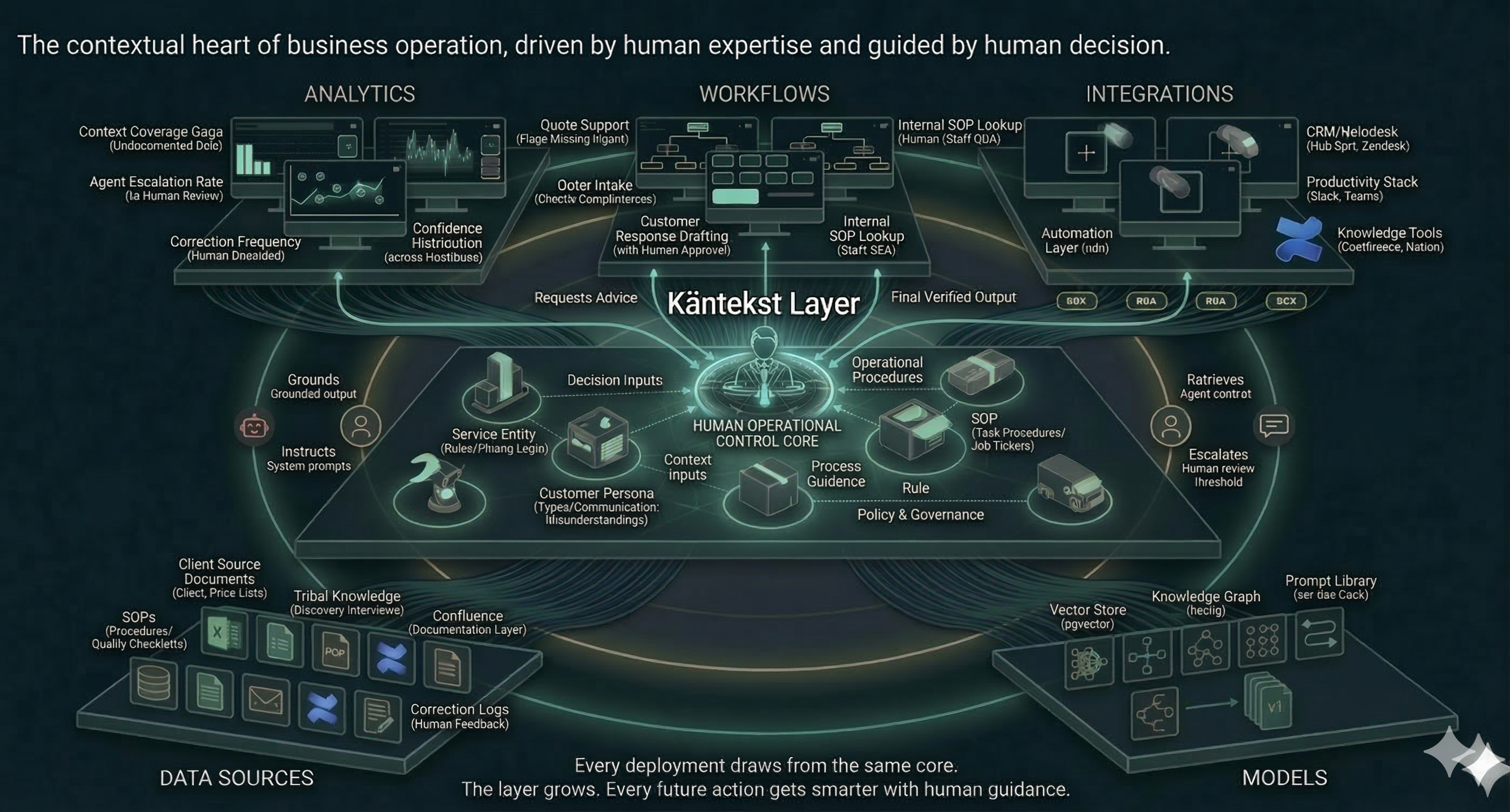
Products, services, policies, process notes, and FAQs structured for retrieval. This is the raw business knowledge an agent draws from when answering a question, drafting a response, or evaluating a request. Without it, every answer is a guess.
System Prompts
Instruction sets that encode business tone, rules, boundaries, and decision authority. A system prompt is the standing brief every agent reads before it acts — defining its role, what it can say, what it cannot do, and how it should behave in every situation it encounters.
Persona Files
Audience context so outputs reflect the right customer, stakeholder, or internal role. Different audiences require different language, detail levels, and assumptions. Persona files ensure the agent adapts its output to who it is actually talking to — not a generic average.
Workflow Maps
Links between tasks, tools, triggers, approvals, and the context each workflow needs. An agent without a workflow map completes tasks in isolation. With one, it understands where it sits in a larger process — what came before, what comes next, and when to hand off to a human.
SOP Libraries
Operational knowledge organized so agents can retrieve and apply it accurately. Standard operating procedures are the institutional memory of a business. Structured into the layer, they become the foundation the agent stands on when handling any routine task — consistently, every time.
Oversight Rules
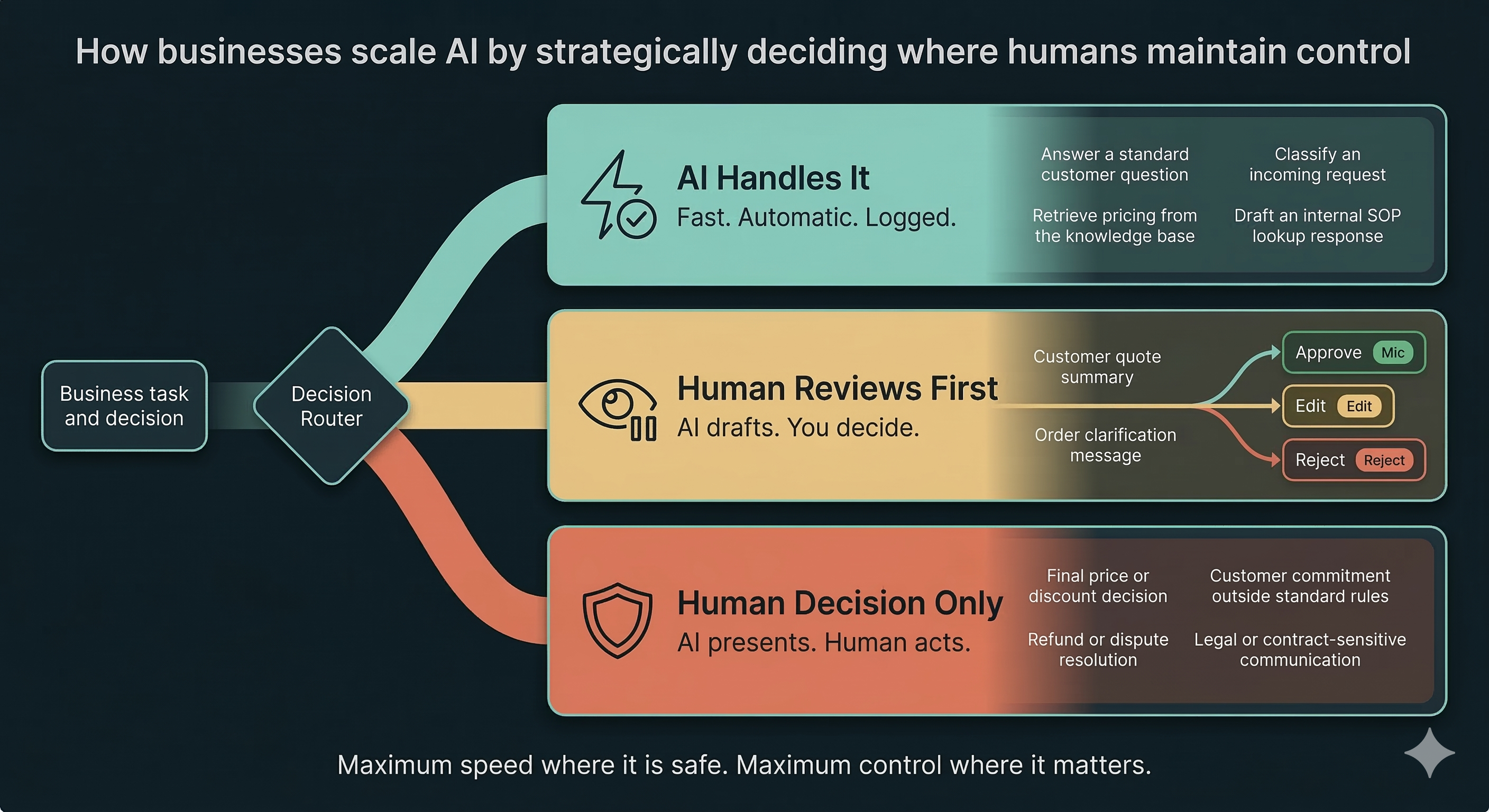
Confidence thresholds, approval paths, and escalation logic for sensitive actions. These are the rules that define where the agent acts freely, where it pauses for review, and where it hands full control to a human. Oversight is not a limitation — it is the architecture that makes automation trustworthy.
Maintenance Cadence
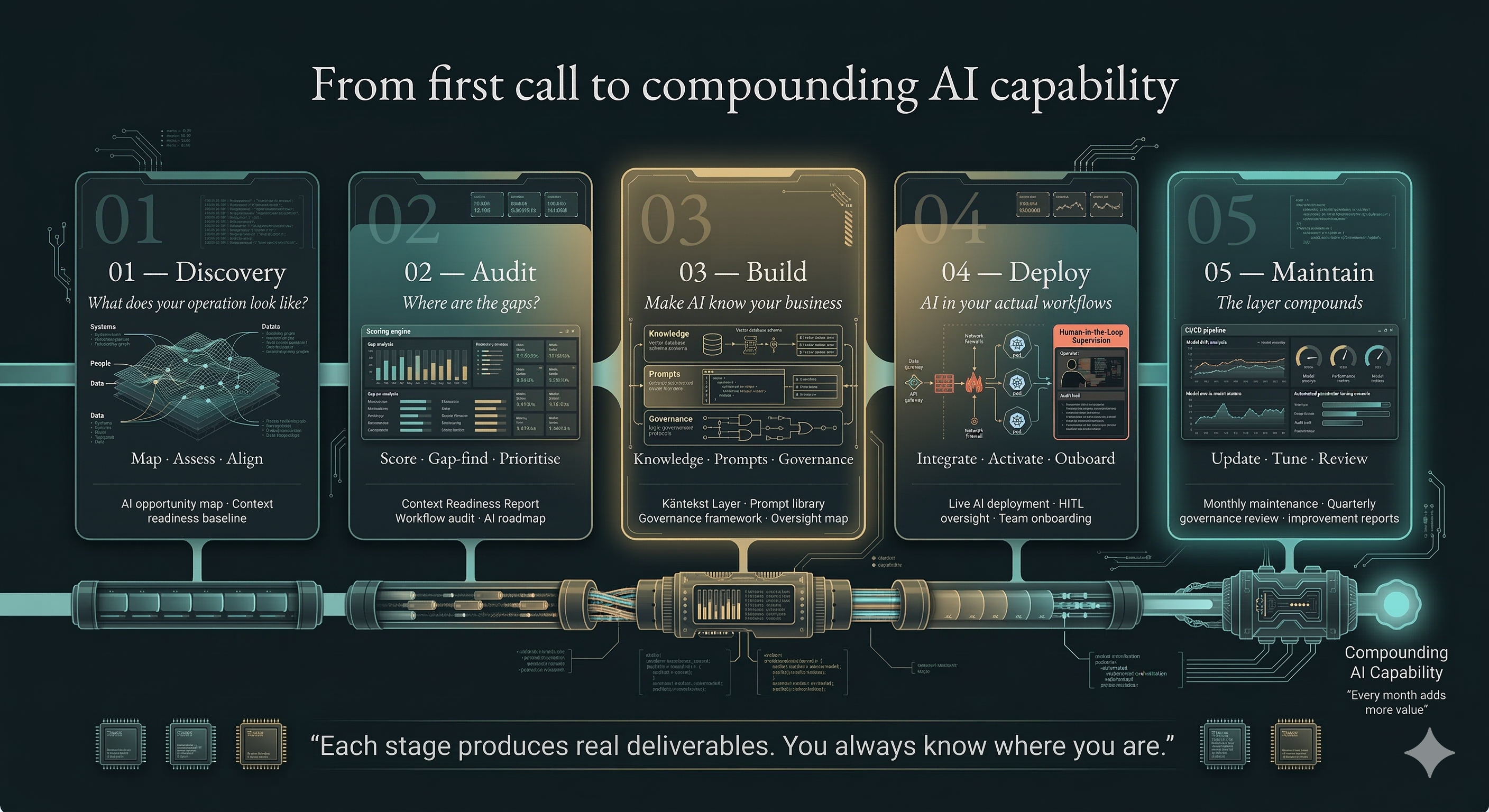
A process for keeping the context current as the business changes over time. A knowledge layer built once and left alone degrades. Prices change. Processes evolve. New products launch. The maintenance cadence turns the layer from a one-time build into a compounding asset that gets more valuable over time.
Governance Framework
The policies, access controls, usage guidelines, and quality standards that govern how AI operates in your business. A governance framework defines who can interact with each deployed agent, what the AI can and cannot say, how knowledge updates are managed and approved, who owns each layer of the context system, and how the whole deployment is audited. Without governance, even well-built AI deployments drift — the framework is what keeps them accountable as the business changes and the team grows.